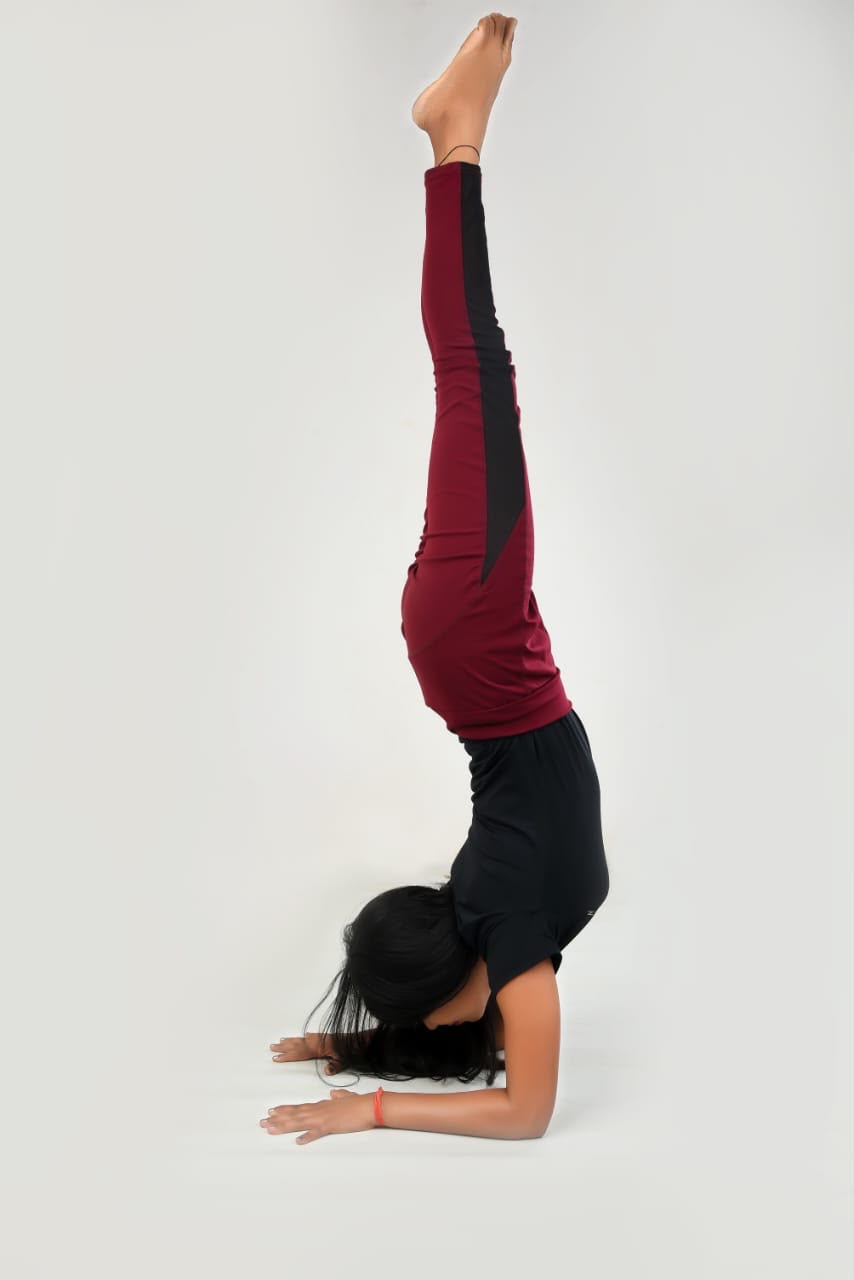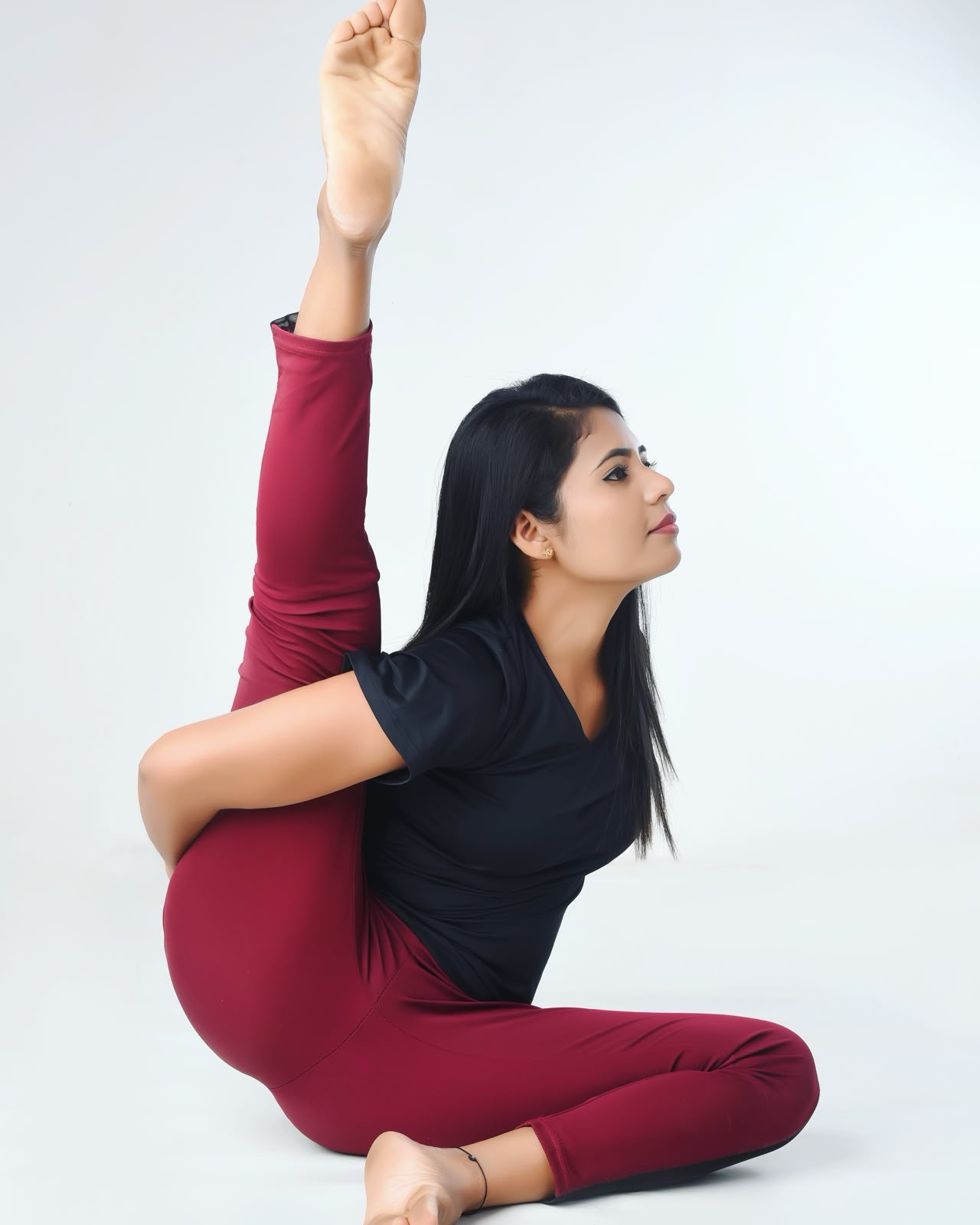
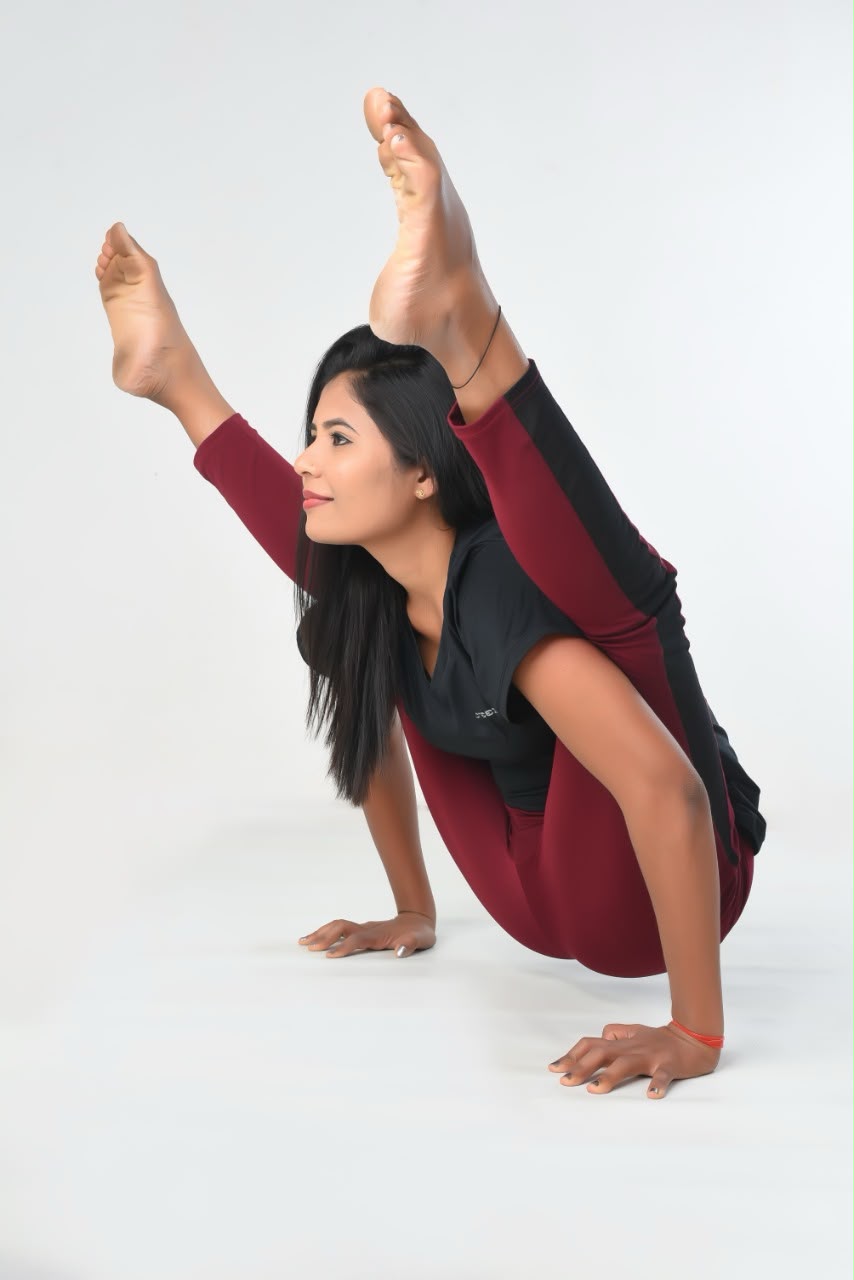
The Advanced Yoga Split Pose is a challenging yoga posture that combines flexibility, balance, hip mobility, leg strength, and upper-body control. In this pose, the body is supported by the hands while the legs are lifted and extended in opposite directions, creating a deep split-like position.
This advanced posture requires good flexibility in the hips, hamstrings, quadriceps, and inner thighs. It also requires strong wrists, arms, shoulders, and core muscles to maintain stability.
Because of its demanding nature, this pose should not be attempted without proper preparation. Beginners should first develop their flexibility and strength through simpler yoga stretches and poses.
What Is the Advanced Yoga Split Pose?
The Advanced Yoga Split Pose is a deep flexibility and balance posture that involves lifting the legs while keeping the hands firmly grounded on the floor.
The pose creates an intense stretch through the hips and legs while the upper body works to maintain balance. It is particularly suitable for experienced yoga practitioners who have already developed sufficient hip and hamstring flexibility.
How to Perform the Advanced Yoga Split Pose
Follow these steps carefully:
- Start in a comfortable seated or low-squat position on your yoga mat.
- Place both palms firmly on the floor in front of your body.
- Engage your core muscles and shift your body weight gradually onto your hands.
- Slowly lift your legs and begin extending them in opposite directions.
- Keep your shoulders stable and your elbows controlled.
- Extend the legs as far as your flexibility allows without forcing the movement.
- Keep your breathing slow and steady throughout the posture.
- Hold the position for a few comfortable breaths.
- Slowly bend your knees and lower your legs back toward the floor.
- Rest for a few moments before repeating the movement.
Never try to achieve a complete split by forcing your legs into position. Flexibility develops gradually with consistent practice.
Benefits of Advanced Yoga Split Pose
1. Improves Hip Flexibility
This posture provides a deep stretch to the hip muscles and surrounding tissues. Regular flexibility training can help improve hip mobility and range of motion.
2. Stretches the Hamstrings
The extended-leg position creates a strong stretch through the hamstrings. This can be useful for practitioners who are working toward deeper leg flexibility.
3. Opens the Inner Thighs
The split position engages and stretches the inner thigh muscles, helping improve flexibility around the hips and legs.
4. Strengthens the Upper Body
Since the body is supported by the hands, the wrists, arms, shoulders, and upper body have to work to maintain stability.
5. Engages the Core
Maintaining balance while the legs are lifted requires active engagement of the abdominal and core muscles.
6. Improves Balance and Body Control
This is not only a flexibility exercise. It also requires coordination, concentration, balance, and controlled movement.
Breathing During the Pose
Breathing plays an important role in advanced yoga postures. Take slow and controlled breaths instead of holding your breath.
Try to relax the muscles that are being stretched while keeping the core active. Controlled breathing can also help you remain focused and stable during the posture.
Common Mistakes to Avoid
While practicing the Advanced Yoga Split Pose, avoid these common mistakes:
- Do not force your legs into a full split.
- Avoid placing excessive pressure on your wrists.
- Do not collapse your shoulders toward the floor.
- Avoid holding your breath.
- Do not rush into the final position.
- Never ignore sharp or sudden pain.
- Do not practice this advanced variation without sufficient flexibility and strength.
Precautions
This pose is not recommended for beginners without proper instruction. People with existing wrist, shoulder, hip, hamstring, knee, or lower-back injuries should avoid attempting this advanced posture without professional guidance.
Always warm up properly before practicing deep flexibility poses. Gentle hip openers, lunges, hamstring stretches, and basic strength exercises can help prepare the body.
If you experience sharp pain, numbness, or discomfort, come out of the pose immediately.
How Beginners Can Prepare
Beginners should not try to copy the complete posture immediately. Instead, start with easier poses that develop the required flexibility and strength.
Some useful preparatory exercises include:
- Low Lunge
- Half Split Pose
- Butterfly Pose
- Pigeon Pose
- Standing Forward Fold
- Seated Forward Fold
- Basic Plank variations
With consistent practice, these preparatory poses can help improve the mobility and strength needed for more advanced yoga movements.
How Long Should You Hold the Pose?
If you are experienced with advanced yoga postures, begin with a short hold of around 5–10 seconds and focus on maintaining proper form.
As your strength, flexibility, and balance improve, you can gradually increase the duration. There is no need to hold the pose for a long time if your body is not ready.
The quality of the posture is more important than the duration.
Final Thoughts
The Advanced Yoga Split Pose is an impressive and challenging posture that combines flexibility, strength, balance, and concentration. It can help experienced practitioners work on hip mobility, leg flexibility, core control, and upper-body stability.
However, advanced yoga is not about forcing the body into difficult positions. Progress should be gradual, controlled, and comfortable. Proper warm-up, consistent practice, and guidance from a qualified yoga instructor can make the practice safer and more effective.
Come to the mat. Breathe. Listen. Begin again.